

 Hamid
Hamid
The easiest way to transform three-phase voltages into two-phase voltages is with two conventional single-phase transformers. The first transformer is connected phase-to-neutral on the primary (three-phase) side and the second transformer is connected between the other two phases on the primary side. The secondary windings of the two transformers are then connected to the two-phase circuit. The phase-to-neutral primary voltage is 90out of phase with the phase-to-phase primary voltage, producing a two-phase voltage across the secondary windings. This simple connection, called the T connection, is shown in Figure below. 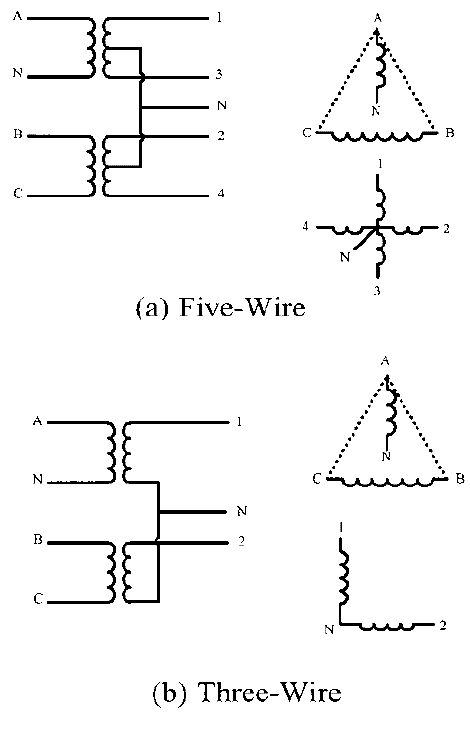 The main advantage of the T connection is that it uses transformers with standard primary and secondary voltages. The disadvantage of the T connection is that a balanced two-phase load still produces unbalanced three-phase currents; i.e., the phase currents in the three phase system do not have equal magnitudes, their phase angles are not 120 apart, and there is a considerable amount of neutral current that must be returned to the source. In order to overcome the disadvantage of the T connection, the Scott connection uses two single-phase transformers of a special design to transform three-phase voltages and currents into two-phase voltages and currents. The first transformer, called the