


- این موضوع 3 پاسخ، 1 کاربر را دارد و آخرین بار در 4 سال، 8 ماه پیش بدست
بهروزرسانی شده است.
-
موضوع
-
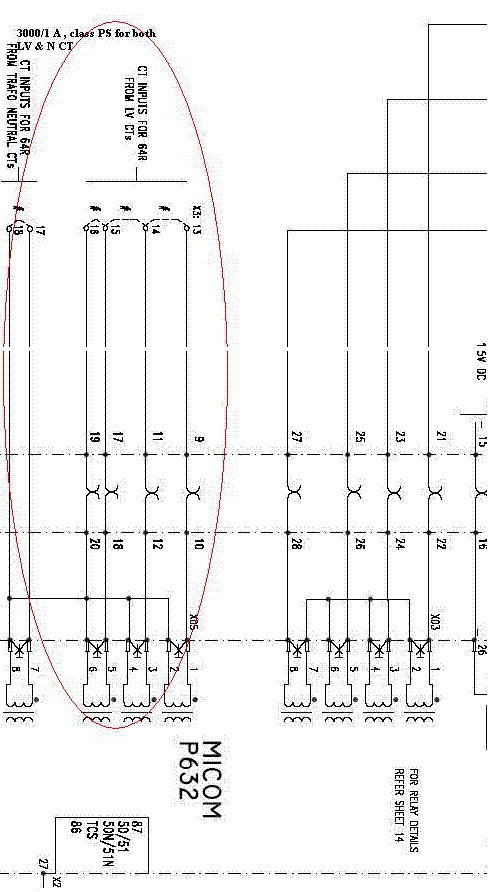
Please find attached image for REF low impedance protection for 2MVA , 11KV/ 0.415 KV , %Z = 7 % .
Please find attached image for REF low impedance protection for 2MVA , 11KV/ 0.415 KV , %Z = 7 % .CT for LV side having ratio 3000/1
CT for neutral having same ratio 3000/1Any body can comments on the scheme for REF , how the scheme work in this case. Is it not necessary that neutral CT and LV Ct connection also common for phase rather only for common ground ( Marked in RED)
What shall be standard value we set for REF of this 2 MVA trafo

در حال نمایش 3 پاسخ ( از کل 3)
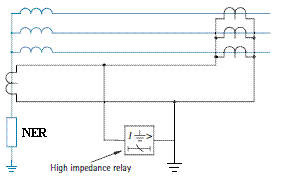 There are many different between low and high impedance REF inherently. The most important difference between classical high impedance REF protection and new low-impedance REF protection is the input impedance. As with all numerical relays, the input impedance of the low-impedance REF is very low compared to high-impedance relays. Low-impedance REF protection does not have the same inherent stability against CT saturation for external faults as does high-impedance REF protection. A second significant difference is that the operating current of the low-impedance REF protection is not realized by CT connection. With low-impedance REF, the relay measures all four CTs necessary to realize the element.
 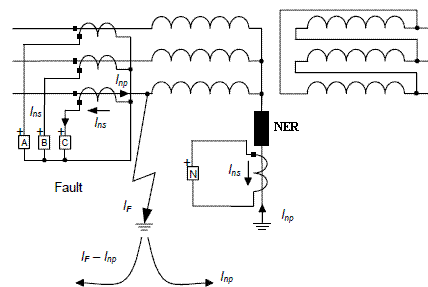 A very important advantage of low-impedance REF protection is the fact that the CT ratios for the phase CTs and neutral CTs do not have to be the same. Most low-impedance REF relays use an operating and a restraint current. The difference between different relays from different manufacturers lies in the way these relays determine the restraint quantities and in the CT saturation detection algorithm of each relay. Note that, in the case of low-impedance REF protection, there is no inherent immunity to CT saturation, as is the case with high-impedance REF protection. The following different methods are used to determine the restraint and operating current: 1. Use of the residual current Ir = Ia + Ib + Ic as the restraint current and the differential current Id = Ia + Ib + Ic
 در حال نمایش 3 پاسخ ( از کل 3)
- شما برای پاسخ به این موضوع باید وارد شوید.