


- این موضوع 1 پاسخ، 1 کاربر را دارد و آخرین بار در 5 سال پیش بدست
بهروزرسانی شده است.
-
موضوع
-
In static excitation system (with brush)of large power plant generators
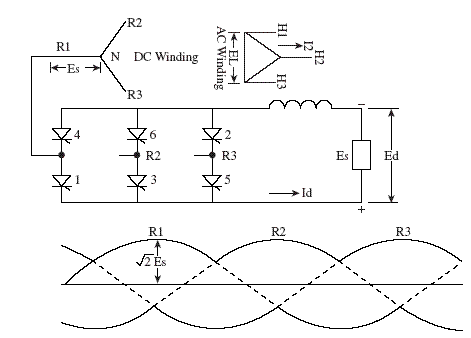
excitation voltage is supplied by 3-ph excitation transformer with typical vector group YD5 or DY5.
can anyone give the explanation for using YD5 or DY5 vector group in excitation transformers.

در حال نمایش 1 پاسخ ( از کل 1)
 All of the harmonic cancellations discussed so far have used simple delta and wye windings in order to achieve them. Additional phase shifts are used to achieve higher pulse orders. This is accomplished by using extended delta windings, zigzag wye windings, and polygon windings. The windings are extended the required amount to produce the degree of shift desired. These are usually done at 7 1/2, 10, 15, and 20 degree, although more increments are possible in order to achieve the desired converter pulse. The type of winding combinations required for the converter pulse desired can be quite comprehensive. A table of typical winding shifts is shown in below table, but other combinations are acceptable. The table shows the required number of secondary windings needed with a single-primary-winding transformer. This is usually used with higher-voltage, low-current secondary windings. It can also be used as the required number of primary-winding shifts and transformers, when the transformers have the same single-secondary-winding phase relationship. This is usually used with high-current secondary windings.
 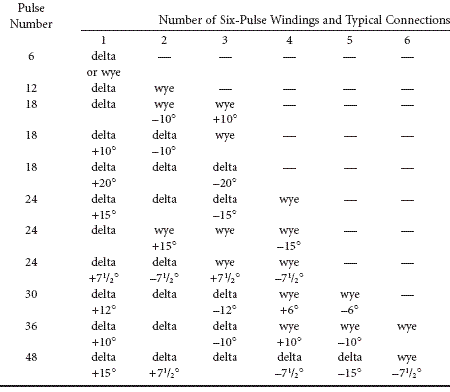 Using different phase shifts on the single winding of the transformer, whether the primary or secondary winding, can increase the number of phase shifts. For instance, two 12-pulse transformers can make a 24-pulse system by using a delta primary on one transformer and a wye primary on the other. In cases where it may be desirable to have an interchangeable spare, it is sometimes beneficial to use two 15
در حال نمایش 1 پاسخ ( از کل 1)
- شما برای پاسخ به این موضوع باید وارد شوید.