


- This topic has 1 reply, 1 voice, and was last updated 4 years, 10 months ago by
.
-
Topic
-
the interposing VTs are used for incoming and running busses in synchronising scheme why these two VTs are used? what are advantages?

Viewing 1 replies (of 1 total)
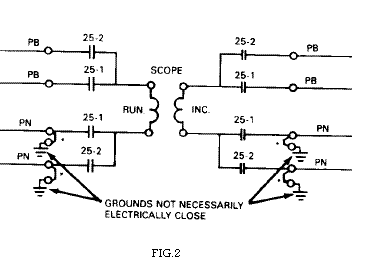
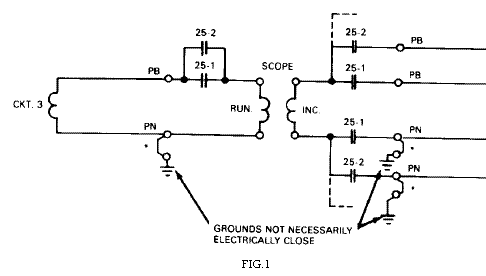 Figure 1 include multiple incoming circuits. Note the 25SS switch contact in the incoming circuits’ neutrals. Since only one 25SS switch is operated at a time, the incoming circuit neutrals are isolated from each other and multiple grounds are not caused by the scope circuit. The running circuit neutral does not need to be switched with this arrangement. If the same scope is used for more than one running circuit, then additional contacts on the 25SS switch are required to switch the running circuit neutrals as shown in Fig 2.
  An alternative to using 25SS switch contacts to switch the running and incoming neutrals is the use of isolation transformers as shown in Fig 3. These isolation transformers are usually rated 11 5 – 1 15 volt, 600 volt class, and sufficient volt-ampere capacity for the scope (and synchronizing lights, if used). Note that the addition of the lights requires that the running and incoming neutrals be connected together (jumper on scope) resulting in two grounds on the neutral circuits. Device 25 contacts in the neutrals eliminate the influence of multiple grounds on other voltage circuits’ burdens except during the relatively brief periods when synchronizing is being done. Normally, this should be satisfactory. If, however, normal ground potential differences are such to cause errors in the scope and synchronizing light indications, then isolation transformers can be used as shown in Fig 3.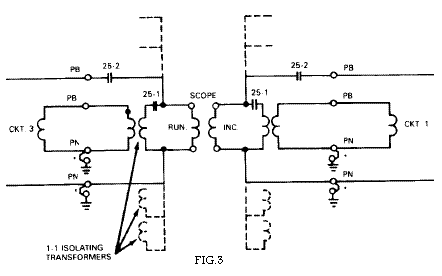
Viewing 1 replies (of 1 total)
- You must be logged in to reply to this topic.